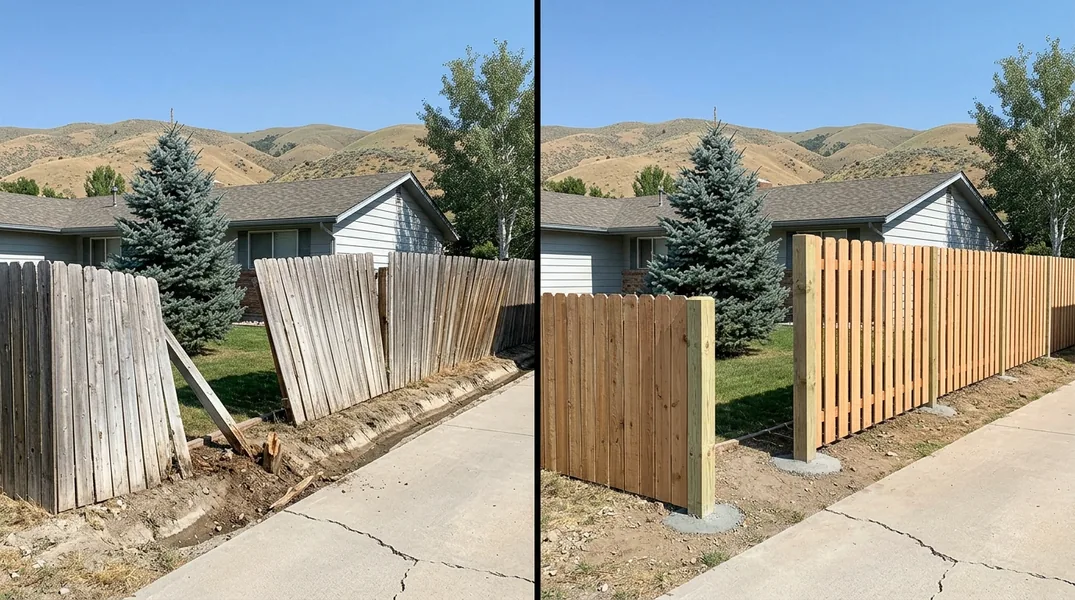
Understanding Boise's Unique Soil and Fence Problems
If you own a home in Boise, you've probably noticed that many fences in the area seem to lean, shift, or settle unevenly over time. This isn't a coincidence, and it's certainly not a sign of poor installation alone. The problem runs deeper, quite literally, into the ground beneath your yard. Boise's soil composition, irrigation practices, and climate create a perfect storm of conditions that can destabilize even well-built fences.
The primary culprit is caliche hardpan, a dense layer of calcium carbonate that forms in many areas throughout the Boise region. This rock-hard subsurface layer sits anywhere from 12 to 36 inches below the surface and acts like a barrier to water drainage and deep root penetration. When fence posts are installed without breaking through this layer properly, or when the post holes don't account for this geological reality, the foundation for your fence is compromised from the start. Add in the region's heavy reliance on irrigation systems for lawns and landscaping, and you have a recipe for fence posts that rot, shift, and eventually cause your entire fence to lean.
How Caliche Hardpan Destabilizes Fence Posts
Caliche hardpan is a naturally occurring layer of soil cemented together by calcium carbonate deposits. In Boise, this layer is incredibly common and presents a unique challenge for fence installation. When a fence post hole is dug, if the auger or shovel doesn't penetrate deep enough or break through the caliche, the post sits on an unstable base. The caliche layer itself is impermeable to water, which means moisture pools around the post base rather than draining away.
This pooling effect is where the real damage begins. Water that can't drain away from your fence post base creates a perpetually moist environment. Wood absorbs this moisture, and over time, the post begins to rot from the bottom up. Even pressure-treated lumber, which is designed to resist rot, can eventually succumb to years of constant moisture exposure. As the post weakens, it loses its ability to hold the fence rails and panels in place. The fence begins to lean, often starting with just a slight tilt that gradually becomes more pronounced as the rot advances.
Irrigation Systems and Rotted Fence Posts
Most homeowners in Boise rely on irrigation systems to keep their lawns green throughout the dry season. While these systems are essential for maintaining attractive landscaping in our climate, they can inadvertently accelerate fence post deterioration. When irrigation lines run near fence posts, or when sprinkler spray regularly wets the base of wooden posts, you're essentially creating a constant moisture source that keeps the wood damp year-round.
The problem is compounded by the fact that Boise's winters can be cold and wet, and summers are hot and dry. This freeze-thaw cycle, combined with constant irrigation moisture, causes the wood to expand and contract repeatedly. Each cycle weakens the structural integrity of the post a little more. Additionally, if your irrigation system is set on a timer that runs during the cooler evening hours, the post base may stay wet overnight and into the morning, never getting a chance to fully dry out. Over five to ten years, this constant moisture exposure can reduce a solid 4x4 post to a soft, spongy core that can no longer support the weight of the fence.
Leaning Fence Repair and Fence Post Replacement Near Me
If you've noticed your fence leaning or sagging, the good news is that the problem is fixable. However, the solution depends on how far the damage has progressed. For fences that are just beginning to lean, sometimes the issue can be addressed by reinforcing the existing posts with concrete or installing support braces. However, if the posts have rotted significantly, Wood & Privacy Fence Installation professionals will recommend full post replacement.
Fence post replacement involves removing the damaged post and installing a new one, typically set deeper into the ground and past the caliche layer when possible. The new post should be installed with proper drainage considerations, such as using post sleeves or concrete collars that direct water away from the wood. When you're looking for leaning fence repair services in Boise, it's crucial to work with a contractor who understands the local soil conditions and knows how to install posts that will last. Boise Fence Company has been serving the Boise area for years and specializes in addressing these exact problems. Call us at (208) 297-6537 to discuss your leaning fence and get a free estimate.
Prevention Strategies for Long-Lasting Fences
The best approach to fence problems is prevention. If you're planning to install a new Wood & Privacy Fence Installation in Boise, ensure that your contractor is aware of caliche hardpan and installs posts deep enough to penetrate or go well below this layer. Posts should be set at least 30 inches deep, and ideally deeper if the caliche layer is particularly thick in your area. The concrete footing should extend above ground level and be sloped away from the post to encourage water runoff.
Additionally, consider the location of your irrigation system relative to your fence. If possible, avoid running sprinkler lines directly against fence posts, or use drip irrigation rather than spray irrigation near the fence line. If you already have a fence and you're concerned about irrigation damage, you can adjust your sprinkler heads to avoid spraying the base of the posts. Some homeowners also choose to install a gravel bed or drainage rock around the post base to promote water drainage and prevent standing water. These preventive measures can add years to the life of your fence and help you avoid expensive repairs down the road.
When to Call a Professional for Fence Post Repair in Boise
Not all fence problems require a complete replacement. Sometimes a single post or a few posts can be repaired or replaced without rebuilding the entire fence. However, determining whether your fence needs minor repairs or major work requires a professional assessment. A leaning fence might be salvageable if caught early, but if the lean is severe or multiple posts are affected, you may need more extensive work.
If you're noticing signs of fence damage such as leaning, sagging, soft or spongy wood at the base of posts, or visible rot, it's time to get a professional opinion. Boise Fence Company can inspect your fence, identify the root cause of the problem, and recommend the most cost-effective solution. Whether you need fence post repair or complete Wood & Privacy Fence Installation, our team has the expertise to handle it. Don't wait until your fence falls over to take action. Contact us today at (208) 297-6537 or visit our website at https://boise-fence-company.com to schedule a free estimate and learn more about protecting your fence investment.
Looking for a professional tree service in Boise? Boise Fence Company responds fast for all your fence needs.
Get a Free Quote